Dubbed the ‘fab four,’ candidates will meet with voters Sunday at a Jackson County Democratic Party forum in Medford as they look to flip the state’s lone Republican congressional seat
By Steve Mitchell, Ashland.news
Voters will have an opportunity to hear from four candidates — all female — seeking the Democratic nomination to challenge U.S. Rep. Cliff Bentz, R-Ontario.
The Jackson County Democratic Party will host a forum at 12:30 p.m. Sunday, Feb. 1, at Oakdale Middle School in Medford. Voters can ask candidates questions on various issues.
Oregon’s 2nd Congressional District is the state’s largest, covering most of the area east of the Willamette Valley and including Jackson County, according to the U.S. Census Bureau.
A Republican stronghold where Bentz won re-election in 2024 with 64% of the vote, the May 19 Democratic primary winner will face a tough race flipping Oregon’s lone conservative district blue, analysts say.
The district has not sent a Democrat to Congress in over 40 years, nor has it elected a woman.
The four candidates have agreed to support the primary winner and donate leftover campaign funds to them.
The candidates, who refer to themselves as the “fab four,” point to recent attention on Bentz, including his support for changes to social service programs such as SNAP and Medicaid, and a shift from in-person to virtual town halls due to safety concerns and disruptions by local activists. They see these factors as an opportunity in the November general election.
Ahead of Sunday’s forum, Ashland.news interviewed the four Democratic candidates about their decisions to run, their priorities, and their respective campaign strategies. Ashland.news also spoke with two Republican challengers who have filed to challenge Bentz in the GOP primary and made numerous attempts to speak to Bentz.
Patty Snow
Patty Snow, 62, an Ashland business owner, said she attributes the closure of her business, OsteoStrong — a health and wellness center she opened with her wife in 2020 — to policies enacted under the Trump administration.
She said the 2025 Budget Reconciliation Act, known as the “One Big Beautiful Bill,” created fear among her senior clients. Many live on fixed incomes. The bill included cuts to programs like Medicaid and SNAP.
“From the time Trump took office until the end of October, we lost 44% of our membership,” she said.
Meanwhile, she said Bentz initially stood on the House floor and said budget cuts could mean devastation for rural hospitals, but later voted for a version of the bill that included the cuts.
“He just voted for it, knowing exactly what it was going to do to his constituents,” she said. “He still voted for it, and to me, that’s inexcusable.”
She said federal policy changes threaten rural communities by risking hospital closures and hurting local businesses. Towns may struggle to attract new firms without hospitals, as companies want employees to have access to care.
Snow said she supports universal health care and lowering prescription costs to protect vulnerable populations.
She said Bentz touted Trump’s idea of imposing tariffs on prescription drugs sent to other countries to ensure those countries pay as much as the U.S. does, when he was asked about lowering drug costs during a virtual town hall.
Health care, she said, should be a human right, along with food, clean air and water.
While some conservatives might question universal health care, believing it could be costly, Snow said her focus is on affordability.
“What has already been passed by this administration is going to make health care costs go up,” she said. “Their insurance premiums are going up drastically, and their access to health care is going to be reduced, especially in our district.”
Taxes might go up, but not as much as their insurance premiums, she said.
People now must choose between prescriptions, doctor visits, or food — they can’t afford all three, she said.
“People are neglecting their health care because that’s become a luxury,” she said.
On other issues, such as immigration, Snow said alternative approaches could be considered.
Currently, some with brown skin or those who speak with an accent may face increased attention from federal immigration agents.
The U.S. needs to “beef up” the system to help people who want to become citizens and are willing to do what it takes.
“We need to make that path easier,” she said.
Snow said she believes immigrants are not the “criminals” sometimes characterized in political discourse.
Snow, who married her wife nine years ago, grew up in a conservative Idaho town and couldn’t imagine coming out as a lesbian.
Since then, she said, the country has come a long way.
“Now, to see the country where it is, where people can be who they are and legally have those same rights as everyone else, that’s huge,” she said.
Snow said recent policy proposals from Trump would roll back legal protections for transgender people, affecting areas such as health care, education, military service, and legal recognition.
Snow said those in the transgender community, especially teenagers, are especially vulnerable.
“We should be increasing people’s rights, not taking them away,” she said.
Dawn Rasmussen
Dawn Rasmussen, 58, a former Wasco School Board member and small-business owner from The Dalles, said she joined the race out of a sense of responsibility to uphold constitutional values, in light of policies by the Trump administration.
She said Bentz has generally supported Trump’s positions.
“Our democracy is slipping away,” she said. “And I realized no one is coming to stand up for us. We have to stand up for us.”
Rasmussen, a resume writer, author and former adjunct faculty member at Concordia University and Mt. Hood Community College, said she has always been interested in politics and has voted in every election since she turned 18.
“I’ve always taken my right to vote very seriously, as a serious obligation to my country,” she said. Not only that, she said she has volunteered on campaigns and initiatives. Given that she has always been interested in the political process, she said she could see that things were changing quickly under the Trump administration amid his slew of Executive Orders.
She said the Democrats have an opportunity to gain ground in the mid-term elections.
Income inequality matters to Rasmussen. She said the ultra-wealthy avoid their fair share of taxes.
“The rest of us contribute significantly,” she said. “Rising prices, tariffs, and job losses are creating economic challenges.”
Rasmussen said her policy focus is on issues that cross partisan divides, including supporting struggling farms, improving access to food and housing, and fixing a broken health care system.
Farm bankruptcies are up 55%, Rasmussen said, citing the U.S. Farm Bureau.
“There are many farmers and ranchers in the 2nd Congressional District,” she said. “Tariffs, weather events, water scarcity, and rising fuel costs all present challenges.”
Rising health care premiums are another area of concern for Rasmussen.
“A healthy society is a productive society,” she said. “And a productive society makes great nations.”
She said the U.S. is one of the few countries in the world without single-payer or universal health care.
“We need to address catastrophic medical bills and work toward care for all,” she said.
On other issues, including immigration, Rasmussen said she supports humane reform to strengthen the country’s borders, including a path to citizenship.
Many undocumented immigrants have grown up in the U.S., she said. Some had parents who migrated before or shortly after their birth.
“Everything they know is here; in their hearts, they’re already Americans,” she said.
Most work, pay taxes, and contribute to Social Security.
While some policy proposals exist to fix immigration, the Trump administration policed neighborhoods of color and conducted raids. Rasmussen said the actions have been “problematic and extremely troubling” for democracy and the rule of law.
Rasmussen said many rural Oregonians feel neglected by mainstream politicians. She welcomes civil conversations based on facts.
“I’m going to listen,” she said. “You might win me over. If not, I’ll still learn something,” which she sees as essential for an elected official.
Rebecca Mueller
Rebecca Mueller, 45, a pediatrician at La Clinica’s West Medford Health Center, said she had long thought about running for elected office.
She’s running to build understanding across party lines. While she leans Democratic, she’s frustrated by the lack of compromise and tendency to demonize other political camps.
“I think there has been a monolithic stance within the Democratic Party that if you don’t check all the boxes, you’re not a true Democrat,” she said.
Democrats, she said, need to change their messaging.
“It’s really important that we continue to be a big tent, not just a big tent for diverse demographics, but also a big tent for diverse ideas,” she said.
For example, she said, there are a lot of people who are, to some extent, pro-life — not necessarily, pro-life starts at conception, pro-life, but who would like some limits to abortion rights, who would like to be a part of the Democratic Party, and often feel totally rejected.
Similarly, she said, there are folks who have some reservations about gender affirming care for minors and want to make sure that parents have all of the information and are making the right decision for their children.
In some Democratic circles, there is a tendency to exile those with middle-of-the-road beliefs.
“Suddenly, you feel like you’re no longer in the tent just because you’re asking questions or want to have some conversations before jumping in. And there’s kind of an expectation that you just jump in and get in line,” she said.
Mueller said she believes transgender rights are human rights and absolutely believes in marriage equality.
She said she was alarmed when a friend made her aware that the U.S. has the most progressive policy in terms of gender affirming care than any other country in the world.
“We are an outlier,” she said.
She said in comparing U.S. standards in transgender care to those published by the European Academy of Paediatrics, the U.S. has the most progressive policy on gender affirming care. The European guidelines, she said, specifically call out the U.S. as an outlier.
Nonetheless, she said, the medical community needs to be discussing how many children should undergo permanent changes.
She said she is not against the idea of minors permanently changing the gender they were assigned at birth, but the problem is that even broaching the conversation can prompt accusations of bigotry.
“I just want to make sure we’re doing the right things,” she said. “And I hear from a lot of people on this issue, when you look at the discourse in kind of the public domain, a lot of folks are like, ‘I want to be supportive, but I am concerned that we’re having these changes being implemented well before a child is of age,’” Mueller said.
On transgender athletes participating in women’s sports, Mueller said there are legitimate concerns about undoing the gains made for women and women’s rights when transgender women compete.
On the economy, one of Mueller’s signature phrases is “accountable capitalism,” an economic framework she believes can resonate with both Republicans and Democrats.
“For me, accountable capitalism means that we pay the workers before we pay the brokers and before we pay the stock investors,” Mueller said.
She pointed to cases in which corporations deliver profits to hedge funds and executives while workers lose pensions or face bankruptcy.
She also criticized industries, such as the plastics industry, for earning “multi-billion-dollar” profits while leaving local communities to shoulder the costs of waste management, environmental cleanup, and the long-term health impacts of microplastics.
“You shouldn’t walk away with profits while the downwind effects are dealt with at a different level,” she said.
Mueller’s own political evolution shapes how she discusses party identity and patriotism.
“One of the reasons that I come at this from the lens that I do is that I used to be a Republican. I was raised by Republicans,” she said.
She said she is a Democrat who resists “group speech” and insists patriotism must include respect for people across the spectrum.
“How can you consider yourself a patriot if you don’t love your countrymen, and that’s all of your countrymen? Part of being a patriot is loving your country as it currently is, not just as it was founded,” she said.
Mary Doyle
Mary Doyle, 57, is a longtime educator and teacher on special assignment in the Bend-LaPine School District. She said her motivation to run stemmed from her deep alarm about the country’s political direction, dating back to the first Trump administration.
Initially, she said she unplugged from cable news and social media, but was drawn back in by deep concerns about what she believes is authoritarianism emanating from the Trump administration and the agenda laid out in Project 2025, the roadmap for the second Trump administration that was penned by the Heritage Foundation. The document, among other things, calls for consolidating power under the executive branch, including previously independent agencies such as the FBI.
Doyle said she recognized that online arguments and “keyboard warrior” exchanges were not helping.
“I was seeing alarming things that were very much QAnon conspiracy theory,” she said. “It wasn’t productive. I wasn’t changing anyone’s mind, and I was just getting more frustrated with not moving the needle with people who are so entrenched.”
Doyle said calling out lies on both sides of the aisle is needed in Washington to move the country forward.
“I really am not an ideologue,” she said. “And I think that if we don’t call out the lies in real time, it’s not going to stop,” she said.
“When we call out the lies, we’re bringing transparency to light, and we’re owning our mistakes along the way,” she said. Instead, on cable news panels, the moderators will simply nod along as a lie is being spouted, according to Doyle.
She said she wouldn’t tolerate it if she were on such a panel.
Like her counterparts, Doyle supports moving toward a Medicare–for–All–style system, but says the path must be pragmatic and community-based, building on models like Mosaic Community Health. Mosaic, a Bend health care provider, integrates medical, dental, nutrition, and other services in what it calls a “patient-centered” approach.
“We have to upend the system,” she said. “We have to remove the middlemen. We have to remove the pharmacy benefit managers, she said. We have to remove any concept of a corporation or a hedge fund owning any kind of health care, because I personally believe we should not be profiting on people’s health.”
As for education, Doyle said her policy priorities would be driven by what she has seen in the classroom and in the Bend-Lapine School District.
She points to La Pine High School as a “proving ground” for Career and Technical Education.
The high school has seen its graduation increase by 25% in three years. The graduation rate among those who participate in CTE programming is around 94%, she said.
Doyle said it’s too easy for students to take on staggering college debt.
“Why are we allowing 18-year-olds to sign their life away when they don’t even understand compound interest and flexible interest rates?” she asked. “They couldn’t qualify for the amount that they’re taking out in loans for a mortgage. Why are we letting them do it for an education?”
She said the evidence of early childhood education and support for families is key to better educational outcomes. That means educating children at home so they come to school with foundational skills. Unfortunately, she said, parents are putting their children in front of a screen and handing the responsibility over to technology due to being entrenched in poverty or trauma. Many, she said, are in “survival mode.”
Republican candidates
On the Republican side, Peter Larson, an admissions counselor at Eastern Oregon University jumped into the race in September, according to his state filing.
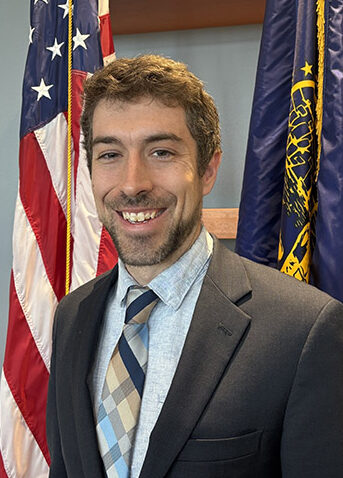
In an email to Ashland.news, Larson said he was motivated to enter the race after seeing the disaster that both the Department of Government Efficiency (DOGE) and the Reconciliation Bill (One Big Beautiful Bill) have caused in the 2nd district, as well as Bentz’s lack of communication.
Federal workers’ lives were upended by mass firings, rehires, budget cuts, and the like, according to Larson.
“The response from Cliff Bentz? He actually stopped holding town halls. He maintained public silence and gave limited interviews. He shrank away from any controversy,” Larson said.
Similarly, he said, the One Big Beautiful Bill will bring chaos and mass benefit losses to thousands of Oregonians in Bentz’s district.
And yet, Larson said, he helped craft those pieces of the legislation and is proud of passing that bill.
“He doesn’t even offer a plan or alternative to help those in need. Our District is going to suffer greatly because of Cliff Bentz,” Larson said.
Rural healthcare is an important issue to Larson.
Living in Union County, he said Grande Ronde Medical Center is blocks from his house.
However, he said many people in Eastern and Southern Oregon are not as fortunate.
“Baker County has no maternity ward and a barely functional hospital,” he said.
Larson said Medicaid reimbursements keep the healthcare system afloat in Union County. The One Big Beautiful Bill will bring cuts to Medicaid.
Pharmacy access is another important issue to Larson. It’s becoming harder to keep small, independent pharmacies alive.
In far-flung places in Eastern Oregon, such as John Day, Len’s Pharmacy doubles as a general store.
His wife is a pharmacist, and Union County is lucky to have three pharmacies, which are a burden for thousands of rural Oregonians seeking their medications.
“Congress must address the crisis that is occurring in retail pharmacy, both in the cost of drugs and the closure of businesses,” he said.
Education is another important issue, Larson said.
“We have excellent post-high school education in District 2, among which are Eastern Oregon University, Southern Oregon University, Treasure Valley Community College and Blue Mountain Community College. The changes in the Department of Education are beginning to limit access to higher education for poor and rural students…the very students the Department of Education is supposed to help,” he said.
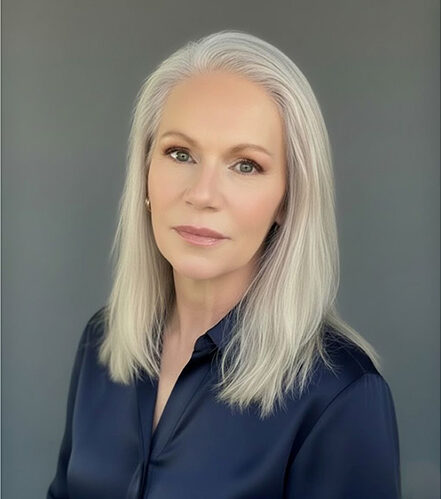
Larson said he supports the people and the Constitution above political party.
The other Republican candidate, Andrea Carr, a personal support worker in Klamath County, said she decided to run because of the “up close and personal” struggles she has witnessed in her communities.
Families and single people are grappling with cuts to health care, unreliable access to SNAP benefits, and a scarcity of stable, living-wage jobs.
“I’ve met with ranchers whose livelihoods and the legacy of generations of hard work are at risk every year due to a lack of support, unpredictable policies, and a government that seems indifferent to their survival,” she said.
Communities deserve a representative who lives and works among them, she said. Someone who understands their challenges and will meet them where they are, not someone wealthy who can’t relate and is disconnected from everyday realities, Carr said.
“I feel compelled to step up and fight back, not just for my daughter’s and my future, but also for my neighbors and the broader community,” she said.
Email Ashland.news associate editor Steve Mitchell at [email protected].
Jan. 31: Updated to note that Rebecca Mueller said the U.S. has the most progressive policy on gender affirming care, compared to standards published by the European Academy of Paediatrics.