After paying off decades-old debt, AFN will overhaul key infrastructure to deliver faster, more reliable service at no extra cost to customers
By Damian Mann for Ashland.news
Customers of Ashland Fiber Network will need to buckle up this summer for a much-needed boost in internet speed and reliability that aims to leapfrog the competition.
The long-sought upgrade to AFN is the result of paying off debt last year, a legacy of the city-run utility’s inception 26 years ago. The debt payments amounted to $500,000 annually.
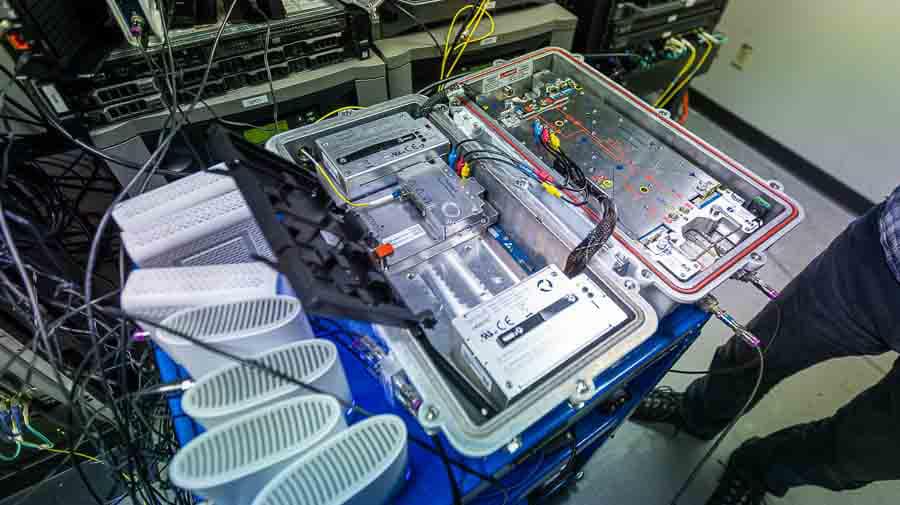
Starting in June, AFN will replace up to 21 of its 38 routing nodes throughout the city with a new technology that will enable upgrades in speeds for coaxial cable customers to be on par with fiber. These nodes, which supply internet to different areas, cost about $10,000 each.
The total cost of the upgrade is $1,179,588.94, and the speed boost will not result in any additional charges for existing AFN customers.
“The speeds will more than likely match existing fiber customer speeds, but the pricing will be the same as existing cable modem service levels,” according to Chad Sabotka, operations manager of AFN.
AFN’s internet speeds have lagged behind the competition in recent years, leaving outlying areas of the city with sluggish connections, resulting in pixelated images from slow downloads and uploads.
Currently, AFN provides internet to 30% of the city’s 12,000 households, and one of its main competitors is Spectrum.
“The reason why people don’t switch over to AFN is consistent speed,” Sabotka said.
The upgrade should surpass Spectrum speeds, improve reliability and help attract new customers, he said.
Even households that won’t directly benefit from the node upgrades will see improved reliability and higher internet speeds. “We’re providing more bandwidth to everyone,” Sabotka said, noting that the current plan is to add 20 nodes, but he’s hoping to squeeze one more into the mix.
To gain more market share, Sabotka said he’s contracted with a marketing firm to get the word out.
“We have a lot of room for growth,” he said.
Older technology has hampered the expansion of market share because the current equipment only allows for a modest increase in customer base.
The new technology will potentially allow AFN to offer a higher level of service of up 70% of customers, including apartment buildings, Sabotka said.
A benefit of the new system is that it allows continued use of coaxial cable, which is common in many households, Sabotka said. Similarly, in downtown areas, fiber can be connected to coaxial cable.
AFN continues to add fiber connections in the city, but the total cost to run fiber to every location is $15 million and would take 2 years to complete.
The equipment upgrade is being installed in areas around the city’s perimeter that are not yet served by fiber.
Sabotka said it is still the goal to bring fiber to the entire city, but it is a slow process for his eight-person team. Sabotka said he’s also helped install fiber in many areas or the city.
He said new developments, such as Beach Creek on Mountain Avenue and another development near Kestrel Park close to Mountain Meadows, have fiber running to them, which will eventually benefit the surrounding residences.
Sabotka, a lifelong video gamer, said the speed and reliability of the new system will be especially noticeable to gamers, video streamers and content creators.
Basic residential internet costs $55 now, providing up to 70 megabits per second download and 6 megabits per second upload. Once the upgrades are completed, download speeds will jump to 500 and upload to 500, about the same as the basic fiber plan.
The current $65 plan, which offers 125 megabits per second download and 8 megabits per second upload, would provide up to 1,000 megabits per second download and 500 megabits per second upload, the same as the advanced fiber plan.
Business and enterprise plans would also see even greater speeds.
AFN rates remain the same for a lifetime rate for a particular user, but at some point, AFN might increase rates for new users, Sabotka said.
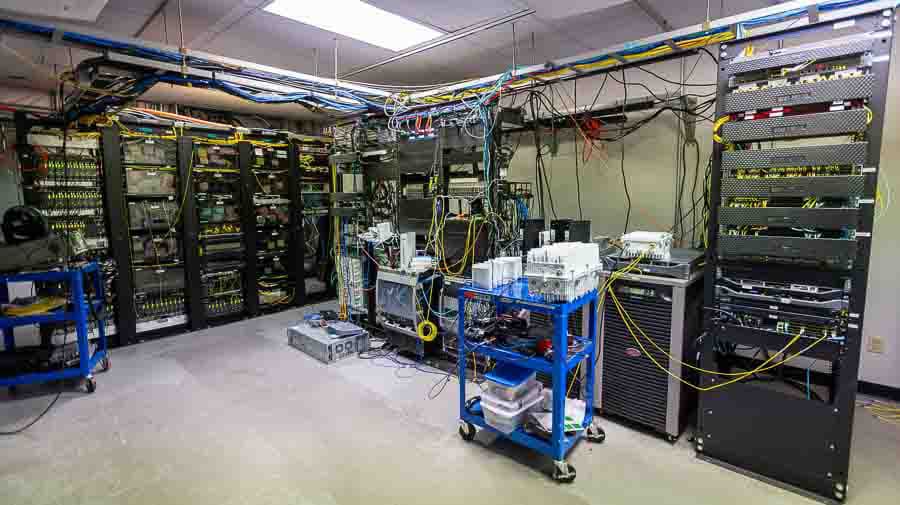
Inside AFN’s nerve center near the City Council chambers on East Main Street are racks of servers, switches, modems and redundant firewalls. Testing of the new nodes is underway inside the building.
The nodes, which are roughly 2 feet by 1 foot, will be mounted to poles and are crammed with circuitry that can withstand wide temperature extremes.
Racks of equipment are reserved for high-end users, including the city, the Ashland School District, the hospital, and Southern Oregon University.
The city alone has 600 gigabytes of random access memory (RAM) to process massive amounts of data, such as utility billing, which is stored in a variety of ways to provide redundancy, including in the cloud and on vacuum-sealed reels of tape.
Even other internet companies, such as Hunter Communications or CenturyLink, run their equipment in the same room, which features four redundant power services and a series of cooling systems to keep everything operational around the clock and at a constant 70 degrees.
A constant whine can be heard as fans near the equipment dispel heat.
Sabotka has an intimate relationship with the internet nerve center, referring to equipment by tree names such as Redwood, river names such as Rogue, or lakes such as Crater.
For those who remember the Voltron anime from the 1980s, Sobotka named equipment after characters from that series, such as Blue Lion.
A lifelong gamer, Sabotka said he cautioned his wife when they married that he’d continue his hobby for the rest of his life.
Reach freelance writer Damian Mann at dmannnews@gmail.com.