Applicant for project on Medella Bison Ranch appeals denial by county planning staff
By Craig Breon for Ashland.news
A six-acre, 1.4 megawatt (MW) solar energy development proposal just outside the north end of Ashland on the east side of Highway 99 is set for public hearing at the county on Monday, Dec. 1. The proposed project on one parcel of a much larger area owned by Medella Bison Ranch, was initially denied approval by county planning staff based primarily on impacts to agricultural lands.
That staff decision has been appealed to a county hearings officer. Once that officer renders a decision, the issue could then be appealed to the state’s Land Use Board of Appeals (LUBA). If appealed, a LUBA decision would be final.
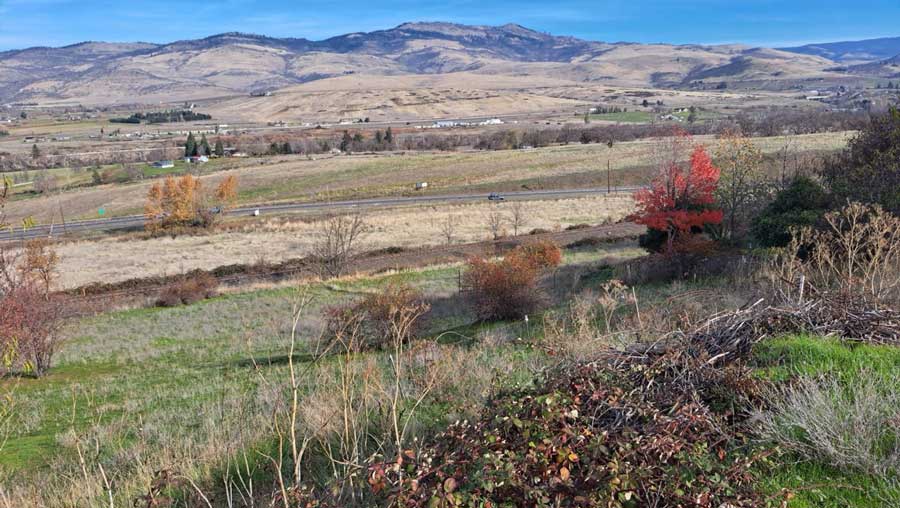
The parcel at issue has been used for grazing and hay production and, according to the county staff report and aerial photos, has a history of field crop cultivation. The parcel is zoned Exclusive Farm Use (EFU). EFU zoning does allow some non-farm uses, but those are tightly controlled by state law, and the county’s Comprehensive Plan and ordinances closely follow those state laws.

A 1.4 MW solar installation located in a high-sun region like the Rogue Valley can provide approximately 2,000 megawatt hours (MWh) per year, depending on location and efficiency of the technology. At a practical level, this is enough energy to power roughly 250 homes.
By comparison, Ashland currently has installed solar of approximately 6.5 MW, with a record 1.15 MW of solar power installed in 2024 (from the Ashland 2025 Climate & Energy Action Plan Report). The Medella Ranch solar panels, if installed, would not count toward Ashland’s numbers due to its location just outside city limits.
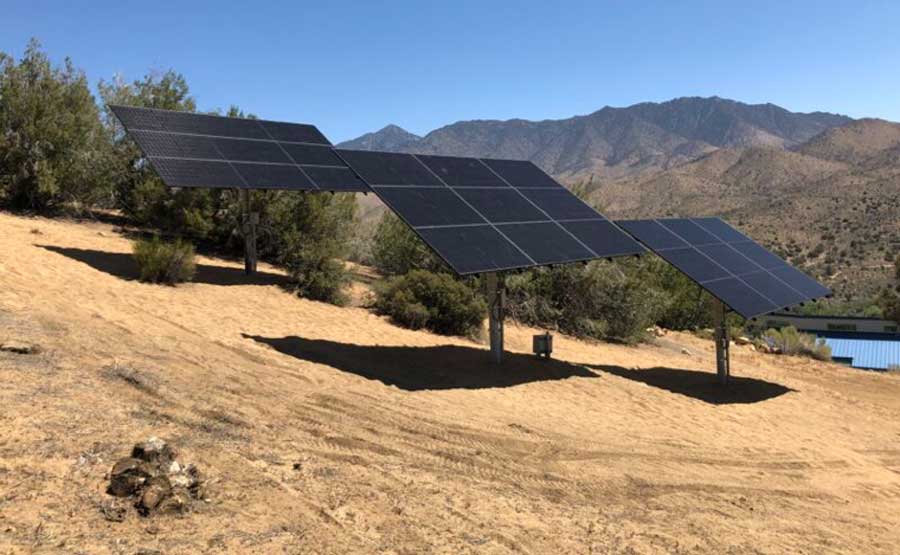
The proposed solar panels would be pole-mounted, similar to those seen opposite the site along Highway 99 in front of car dealerships and Lithia Springs Resort.

The mounted solar panels would be visible from both Highway 99 and surrounding properties. Directly across Highway 99 lies the future site of the recently approved Grand Terrace apartments. Those apartments facing toward Grizzly Peak would have essentially an aerial view of the solar site.
The crux of the county staff denial decision rests in preservation of EFU lands and whether the solar application provides sufficient evidence to qualify as an appropriate non-farm use of agricultural lands.
At a macro level, Jackson County’s Comprehensive Plan is quite clear, with the section entitled “Agricultural Lands” followed immediately by the words, “Goal: To Preserve and Maintain Agricultural Lands.” This follows directly from Statewide Planning Goal #3, “Agricultural lands shall be preserved and maintained for farm use, consistent with existing and future needs for agricultural products, forest, and open space.”
The Medella Ranch application argues that the lands proposed for solar are not, in fact, arable lands. To support this argument, the application includes soil surveys and accompanying maps. From those, it is clear that the proposed solar lands are not “prime” agricultural soils.
County staff’s response is direct, “Staff does not agree with the Applicant’s findings.”
The staff decision cites the EFU zoning and the historic use of the land for various agricultural purposes. In addition, county staff point out that the lands in question have benefitted from state taxation laws allowing lands zoned EFU to be taxed at their farmland value, which is less than market value and thus leads to lower taxation.
The solar project application further argues that mounted solar is compatible with continued use of the land for hay production or grazing. The staff response to this is also negative, stating that the applicant has not provided sufficient evidence to show that the project would fit into the many conditions required for such a non-agricultural use of the land.
The county hearing officer’s public meeting starts at 1:30 p.m. Monday, Dec. 1, at 10 South Oakdale Ave. in Medford. Hearing attendees will have the opportunity for public comment.
Email Jackson County resident, consultant and former environmental law instructor Craig Breon at [email protected].