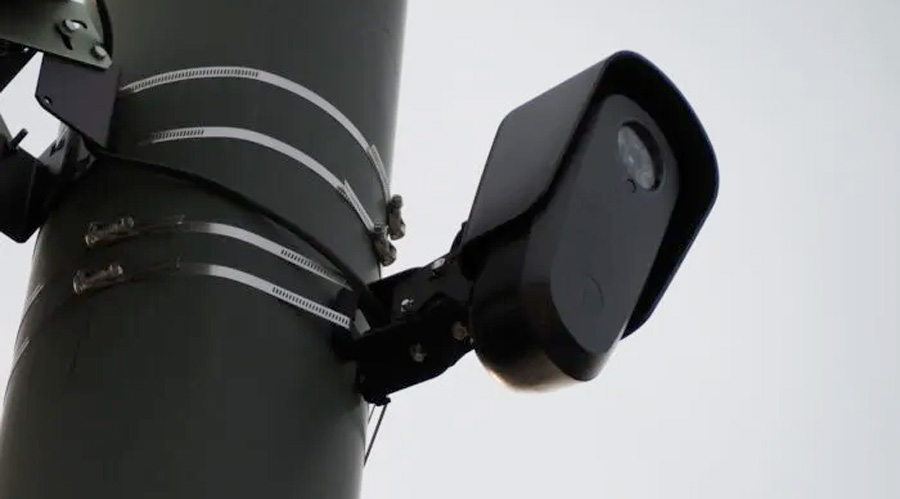
Other local cities ‘monitoring the conversation’; pausing of cameras comes amid state and national dialogue about potential misuse of collected data
By Buffy Pollock, Rogue Valley Times
Talent City Council members suspended the use of Flock surveillance cameras in recent weeks due to concern over potential misuse of data that government officials believe are in contradiction to Oregon’s Sanctuary State laws and could be used during immigration crackdowns by federal agents.
Talent Interim City Manager Alex Campbell told the Rogue Valley Times that council members on Dec. 17 unanimously passed a motion pausing the cameras — solar-powered, automated license plate readers — inside city limits and also preventing previously permitted data sharing from the connected cameras.
The decision, the first to pause Flock cameras in the Rogue Valley, comes amid cities around the U.S. moving to protect data collected from the cloud-style searchable database. Outside Southern Oregon, the cities of Eugene and Springfield announced their decision earlier this month that they would discontinue use of Flock cameras in those cities.
The decision by the city of Eugene occurred within weeks of a lawsuit by the American Civil Liberties Union on behalf of an “Eyes Off Eugene” member who said city officials there concealed the location of 57 Flock surveillance cameras, thus eroding public trust.
Hosting the largest network of surveillance cameras in the U.S., Georgia-based Flock Safety contracts with more than 5,000 police departments nationwide and stores billions of vehicle scans each month — reportedly deleted after 30 days but automatically deleted if not needed for an active investigation — in its database.
The recent motion by Talent city officials, who approved installation of Flock cameras last year via grant funding by the Criminal Justice Commission, also supported directing city staff to “draft policy options regarding surveillance activity and surveillance technology as well as the storage of technology and data” for future council discussion, Campbell said.
The city manager said Talent police Chief Jennifer Snook paused the operation of the Flock cameras prior to the recent council meeting.
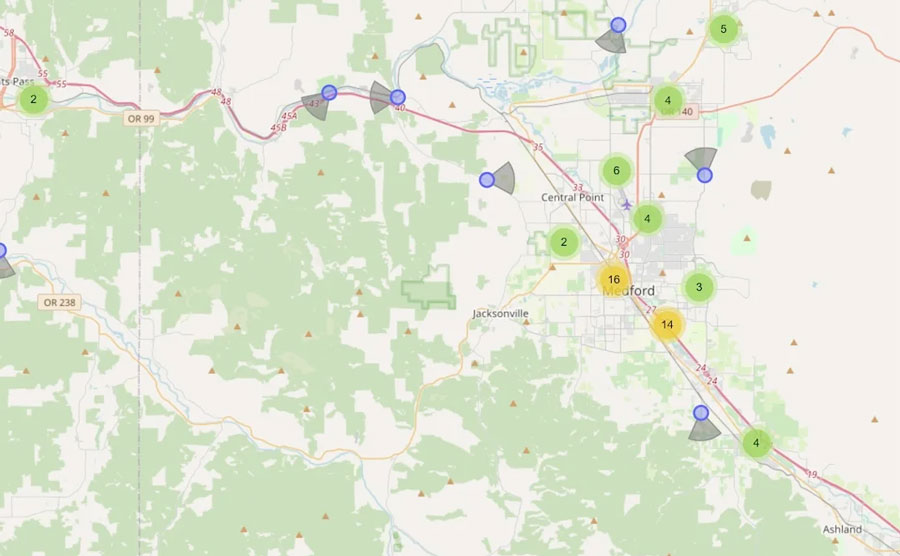
The city had installed cameras in four locations: two on West Valley View Road, one of North Pacific Highway and another on South Pacific Highway.
“Our (police) chief had already turned off the cameras prior to that meeting and (following the council meeting) also turned off all data sharing because there is still 30 days of data in the system,” Campbell told the Times.
While the city will no longer collect data, the city’s contract with Flock does not expire until February, meaning the city can still gather data from Flock cameras in other jurisdictions.
“Our understanding is that the data is only supposed to be available to other law enforcement jurisdictions in Oregon,” Campbell said, “… but there have been some concerns raised about misuse of that data … that would be contrary to Oregon Sanctuary Law.”
“Sanctuary State” laws limit local and state government cooperation with federal immigration enforcement, preventing police from arresting individuals solely for civil immigration violations.
Sen. Wyden speaks out
On a state level, Sen. Ron Wyden, D-Ore., has spoken out against “ineffective protections” against abuses by federal agencies and out-of-state law enforcement, and he urged cities in Oregon to turn off the cameras.
Wyden’s office slammed the surveillance tech company Flock for “failing to meet its pledge to protect Oregonians against immigration and abortion-related searches by out-of-state law enforcement agencies and for deceiving state and local law enforcement customers about its sharing of their data with the Department of Homeland Security and other federal agencies.”
“At the urging of concerned constituents, I conducted further oversight and have determined that Flock cannot live up to its commitment to protect the privacy and security of Oregonians,” Wyden wrote in his letter to Flock Chief Executive Officer Garrett Langley. “Abuse of Flock cameras is inevitable, and Flock has made it clear it takes no responsibility to prevent or detect that.”
Wyden said abuses of Flock cameras for reasons other than they are intended are “not only likely but inevitable” and said Flock was “unable and uninterested in preventing them.”
Wyden wrote, “In my view, local elected officials can best protect their constituents from the inevitable abuses of Flock cameras by removing Flock from their communities.”
An online map hosted by an open source project dubbed DeFlock.me shows locations of Flock surveillance cameras in the Rogue Valley. The map shows Flock camera locations in cities including Medford, Central Point, Eagle Point, Gold Hill and the unincorporated community of White City, which falls under county jurisdiction.
Other cities weigh their options
Police officials for the cities of Ashland and Phoenix told the Times this week that those two cities don’t currently use, or have plans to add, Flock cameras, though both cities called the cameras useful technology in solving crimes.
City of Medford spokesperson Kristina Johnsen said the city was “aware of Talent’s decision and is monitoring the regional discussion” regarding the cameras.
Johnsen said, “The City uses ALPR technology in limited locations for public safety purposes, including assisting with investigations into serious crimes such as burglaries, homicides, and stolen vehicle cases, in accordance with state law and department policy.”
Jackson County District Attorney Patrick Green said he understood privacy concerns with the Flock cameras but said they had been “a huge tool in investigating and solving crimes in our area over the years, especially violent crime.”
“We have had multiple homicide investigations where Flock cameras helped us identify the suspects much quicker than we otherwise would have. It will be a significant negative for public safety in our area to turn them off,” Green told the Times this week. “There are ways to strike a balance that addresses privacy concerns while still allowing law enforcement to use this important tool to solve crime, and I hope that is the focus and end result.”
Reach reporter Buffy Pollock at 458-488-2029 or [email protected]. Follow her on Twitter @orwritergal. This story first appeared in the Rogue Valley Times.